Monday, June 3, 2019

Caffine and Dopamine


Image result for computer and coffeeCaffine and dopamine.  How I start my day.  I make coffee, and sit at the computer, checking in with my social media outlets. Why?  If I've been responded to, with likes,  hearts, views or comments, it feels good.

Caffine, no need to explain.  Dopamine, however, may warrent a word or two.

Dopamine is a neurotransitter, a chemical substance that causes certain nerves in the brain to fire.  These nerves are involved with a whole host of things, including movement (Parkinsons disease is essentially a disorder caused by lack of dopamine) and attention.

It is the brain chemical that seems most closely tied to computer gaming and social media.  Dopamine is important to the "reward structure" in the brain.  When something happens that pleases you, a jolt of dopamine hits your brain.  Bzzzzt!  Since dopamine leaves you happy (very simplistically put!) you are more likely to repeat the action that resulted in that dopamine jolt.

Social media seems to be riddled with opportunities for dopamine jolts.  A thumbs up on a Facebook post?  Bzzzzt!  Someone replies to a Twitter post?  Bzzzzt!  The stats show that someone's read you blog?  Bzzzzt! 

It's that last one that is looking especially interesting.  Recently, a study of infant-maternal bonding indicated that dopamine may play a role in human bonding.  If that is the case, perhaps the dopamine jolt one may get from having a blog reader comment on a post not only makes you feel good, but also predisposes you to bond with the individual that made the comment.  Bzzzzt!

Perhaps one factor in the development of social media communities is that, as we are responsed to, the release of dopamine not onlly gives us that bzzzzzt! of pleasure, but increases the likelihood that we will bond with the individual who has responded to us.

This is not to give human bonding a simplistic explanation, nor to indicate that dopamine is a simple "feel good" chemical (neither dopamine nor social relationships are so easily understood, mores the pity). This post is merely a bit of information on how, perhaps, the phenomeon of social media communities has come to be.

Sunday, June 2, 2019

Reflection on pseudoidentity

When I was in high school, I kept a diary.  A pen and paper diary, that I kept hidden.  My little brother found it, and entertained his buddies by reading excerpts from it.  

Turns out that more than one woman I know has had a similar experience.  My neighbor, for instance.

We, like many, have concerns over privacy and are not entirely trustful with diaristic blogging. I have written before (see Think of your reputation, my dear)  that I do guard my personas, depending on what social media platform I am writing. 

Image result for masks

Having recently finished Dr. Dennen's Constructing academic alter-egos: identiy issues in a blog-based community, I wonder how I might develop another identity, should I continue wandering through the blogosphere.

I might not use my own name, my last name being fairly identifyable.  And it would be fun to come up with a new one.  

I would definately change the graphic design of my template, but that is more a matter of familiarity with blogging template.  And I already have my Bitmoji avatar.

My voice and content?  Actually, both are more authentic in my blogs than in my face-to-face "office lady" life.  When I shake off the feeling that I should be writing miniature scholarly papers, my voice rings truer here than it often does face-to-face.  

I am fortunate that I could take on a pseudoidentity at a later time, but don't think I need to do so.  However, to quote Doris Day, "the future's not ours to see."*  There may come a time when I wish to blog beyond bounds of professional or even political seemliness.  If such a time comes, the norms of pseudoidentify in blog-based communities will have a comforting familiarity.

* The Man Who Knew Too Much, directed by Alfred Hitchcock, 1956.

Saturday, June 1, 2019

Think of your reputation, my dear

While reading The Emerging Neuroscience of Social Media, I was struck by one sentence.
People use social media for two primary reasons: (i) to connect with others, and (ii) to manage the impression they make on others.
The first reason is interesting enough, but it was the second reason that floored me.  It had not crossed my mind that I used social media to, as Great-Great-Granny might have put it, manage my reputation.

I am bemused to find that I do.  

I will spare you the evolutionary benefits of putting out and maintaining one's reputation.  They revolve around the idea that the group aristocrat gets the goodies.  Rather, I will try to stick to the topic.

On Facebook, I take care to react to and share wry, witty content from various sites that I find to be sophisticated (and so guarding my reputation for quirky intelligence).  I gently ask for opinions and reasons from "friends" with differing political backgrounds - but rarely get answers, more is the pity. (Maintaining my self-described reputation as curious, analytical, questing for understanding, etc.)

On Linked In, I try to manage my reputation as someone who is a seasoned professional, with a broad range of positions, but also as someone who is hip to the modern world on learning technologies and would be interesting to work with.  Considering my age (hard to hide with my profile picture, I try to post au courant content, again trying to manage my reputation as well-versed in current learning technologies, theory, etc.

On Instagram, I was tempted to say I don't give a hoot for my reputation, and will post anything, but that isn't true.  I consider myself something of an artist, and absolutely would not post something that didn't please my own eye.  Heavens forbid I become known for spontaneity as opposed to reason.

On blogging, well, I'm somehow willing to let myself go and be a crank.  With one exception, I feel no fear of context collapse, and so find myself more willing to let go of the reputation I guard in other forms of social media.  With other forms of social media, the threat of context collapse is much more eminent.  I am connected to my family on Facebook, I may work with my connections on Linked In, and my next-door neighbor follows me on Instagram.  

I would be very interested in hearing from you about how, or if, you use social media to "manage the impression you make on others." 


Thursday, May 30, 2019

PLEs: A tool for self-regulation in social communication?


A caveat:  This post is going to discuss an idea about coaching individuals with medical, social, psychological or whatever diagnoses.   I am not a professional in this area but, being a person with ADHD, I've picked up, through informal learning, some information on coaching.  

I'm also thinking while blogging - not something I'm comfortable with, but a phenomenon that has been pointed out as one function of blogging.   So... here goes.  No virtual rotten tomatoes please.

While reading Dabbah and Kirsantas description of a framework for supporting self-regulated learning in PLE's, the progression from Level 1, a personal, private online environment to Level 2, a socially open environment,  jumped out to me as a way of supporting social development in learners with what I'm calling "social impairment" for lack of a better term.

Learners with many different cognitive/intellectual deficits, such as autism, ADD/ADHD, Down's Syndrome, as well as social anxiety disorders, display problems in managing the social act of communication, the temporal aspects of speaking and listening, appropriate affect, balancing monopolizing a conversation, etc.

I wonder if allowing a learner who would benefit from learning/coaching in social communication would benefit from being guided and encouraged to move from a safe and private online environment, (Zimmerman's "forethought" phase) in which the learner prepares tools for communicating effectively, to a gradually more socially active, conversational, perhaps collaborative environment (Dabbagh and Kitsanta's level 2, Zimmerman's performance phase).  Would this be an effective opportunity for coaching?

This is what I'm wondering about now, the role of mirror neurons and social media

There are these wonderful little neurons, mirror neurons, that seem to convince bone and muscle tissue that it is acting, while the individual is merely observing an action.  Perhaps there is a variety of mirror neuron that would function similarly with Web 2.0 interactions.

Hmmmm.....

A few minutes later...

Bless Google's heart, there is a body of information on mirror neurons and social media.  

One nifty article is, Of Mirror Neurons and Social Media, which gives mirror neurons a place in social media.  Contrasting that is How Social Media Affects your Brain, which denies mirror neurons any place in interactions via social media.

A blog post for another day.


Wednesday, May 29, 2019

How Digital Media Helps Me Love My Job

That EME6414 Instagram challenge just about killed me.  

I was doing OK with Instagram, until I created a second page.  Sorrow and woe ensued.  There was some nonsense about taking a picture in one account, and sending it to another account, and where to put it, and if it came from a message.  

I tried looking for directions, but nothing seemed help.  Not even my next-door neighbor who told me she knew Instagram.  (More sorry and woe; now she is confused, too.)

The issue, I believe, is that I didn't know enough to define the problem, and so was thrashing around, randomly pressing and clicking and eventually making SOMETHING happen... Sometimes even the right thing, but... because it came from random thrashing, I couldn't remember what I had done.  

I was so distraught about what to do with the image that I just didn't take the </explicative> shot at all.


Image result for the exorcist images
Linda Blair Head Spinning Dummy,
from the Exorcist
You may be familiar with Quality Matters (QM), a systematic method for evaluating online courses.  The QM rubric provides a detailed framework for scoring components of a course.  A seemingly nit-picky standard.  A standard that at times can make your head spin around 360 when you are putting together an online course.  


Case in point: A crucial set of points goes into explicitly making sure that your learner always knows exactly where to go and what to do.

"Surely," one might say, "all this is not necessary.  They are (fill in the blank) students; they can figure it out."  

You know what?  Sometimes, for one reason or another, they can't.  Perhaps its an off day.  Or the kid is sick and the learner is up too late.  Or the learner may have any number of neuroatypical glitches that require support.  (Like adult ADHD, like me! 👩)

More importantly, learners shouldn't have to expend energy figuring out where to go.  An individual's capacity for taking in information at a single point in time has limitations.  Would you prefer that a student get what might seem like an overly detailed course map and/or set of instructions, or to be spending energy wandering around lost in an online course.

So, I don't love Instagram quite yet, but my experience has left me happier to expend the energy in making sure learners don't have to wander in an online wilderness. 

Gotta love the unintended consequences of social media.

Saturday, May 25, 2019

Is Web.2 the mother of the gig economy?


Technology and social change have great and transformative impacts on work. 
The Iron Age roughly 1,000 BCE, ushered in agricultural societies, that first supported and then largely replaced hunter gatherer societies.  The ability to use metal to create plows, and shovels, as well as weapons for defending farming communities changed the economics of the day.
Huge leap forward to the Industrial Revolution, roughly the 19th century CE, which dramatically changed the economic landscape by introducing technology-enabled, steam engine and other tools for manufacturing work, making a dent in the agricultural economy.


Another huge leap to the Information Age, or better for our purpose, the New Media Age, (aka the Information Age or the Computer Age), let's say very late 20-21st CE.  And here we are.


 Always, some gain and some lose in the birthing of a new economic age.  

This post deals a phenomenon, that seems to cut both ways, the gig economy, defined narrowly as "a labor market characterized by the prevalence of short-term contracts or freelance work as opposed to permanent jobs."  Note that this is not about having a gig.  Many in the "salaried economy" have gigs, to keep life interesting or to provide extra income.  The "gig economy" replaces the salaried positions as described above.

A fuller understanding of the gig economy can be seen in the video below.


Video attributed to  Chinmay Panda, retrieved from What is Gig Economy?

The necessary requirements of the gig economy are :

  1. Independent workers who are paid "piecemeal," or by the gig. Gig workers can be classified under two categories: labor providers, such as drivers, and house cleaners and good providers, such as artists, craftsmen and instructional designers.
  2. Consumers who need a specific service or product, such as ride, or a module for a larger program, or an editor for a storyboard,
  3. Technology platforms that allow for direct transaction between customer and provider, flexible work schedules for gig workers, online payments, from which the platform takes a cut, and online profiles and reviewers of both producers and consumers.
The number of workers in the gig economy has risen from 10.1% in 2005 to 15.8% in 2015. 24 percent of workers reports earning some money through gigs during the year of 2015.  The growth in gig work is attributed t0 the development of technologies that easily put worker and consumer in tough, and by the decrease in the number of individuals who can find traditions, salaried, paying jobs.

However, the mindset of workers has shifted over the years,and prior to the birth of the gig.
In the 1950's and 60s, it was common for workers to stay in the same company through out reviewment.  After this, workers developed a pattern of switching jobs more often, working up the ladder by seeking out new employer, rather than working up the "corporate ladder" of a singer company.

While some workers still seek the stability of a known workplace and known salary, other workers seek out the flexibility and autonomy of the gig economy.  


What is the function of social media in all this?
Social media is helping people build their own private portfolio, especially since companies are starting to recognize that tenure is not that important, but rather it is who you’re connected with and where the next opportunity will come from. The mindset of the independent contractor is to move faster. They want to have a one-click approach when applying for a job, so they will definitely use social media to connect with somebody who may have an opportunity for them. The internet allows them to find job posts, but it is the social web that allows them to make a trusted connection. You can see who the contractor’s contacts are. You can see who they are associated with. As a result, you have a lot more confidence in who you’re hiring to get things done.
McAlister, K, October 15, 2015 The Independent contractor and social media.

McAlister further states that LinkedIn is the social media tool most likely to come into play here, Linked In is stated by the authors as being the worlds largest staffing system. 

The gig economy is beneficial to some, but less beneficial to others.  While the gig economy has already been said to provide the worker with freedom and autonomy, it may also supply stress at not being able to predict with 100% that the next gig will be around the door.  It can lead to uncertainty in finance in the short term.  Perhaps more importantly, those in the gig economy are  less able to benefit from public social safety nets, and indeed are not contributing to the social safety nets that they themselves might rely upon.

There tends also be a blurring between home and work life. Rainie and Wellman write of this in their chapter "Networked Work" describing the effect of teleworking on home life.  Gig working could be described as teleworking, but more so, so one would not be surprised to find greater intrusion of work into family life.

In closing, I believe that the gig economy is the child of business seeking a more agile and lean workforce that can work at multiple jobs at a "multi-tasking clip.  That these workers can work remotely is a plus for keeping less of an office infrasture alive. This push has found its summit in the form of the "gig worker" who can make use of networked technology to produce, but does not rely of the company to provide him or her with the platform of that technology.


  Creative Commons Creative Commons Attribution 2.0 Generic LicenseTitle image by  cogdogblog 


Thursday, May 23, 2019

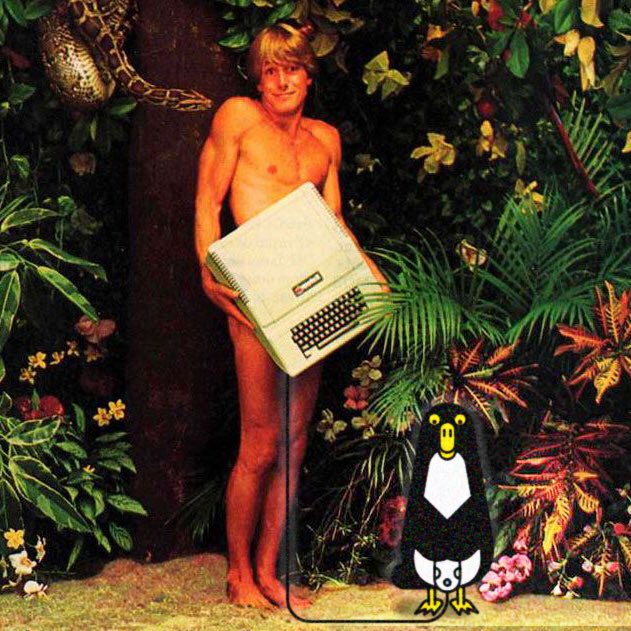
Digital Natives in the Garden of Eden?


A caveat here.   I am mixing my metaphors wildly.  And throwing in theology, anthropology,and a few other -ologies.  I hope you will find this to an interesting exercise.  

Foundationalism, in theology, is the belief that there is a single One Perfect Right for each everything under G_d's creation, incomprehensible by humans because, well, we're humans and not G_d.  (This, BTW, is the basis of the concept of the Augustinian "perfect traveler" concept I trotted out in an earlier blog - the perfect traveler cannot see the single Right way and practice, but works to travel towards it.)

The story of the Garden of Eden is a nuanced one, incorporating ideas of Foundationalism.  Eden was the One Perfect Right world, according to the story.  Humans, of course, bungled it, got kicked out and had to go out and hunt Mastodons and protect themselves from Saber-Toothed Tigers.  (Told you I was mixing my metaphors.)

As close to Foundationalism as I get is the belief that there may be One Perfect Right means of learning and teaching, and cognitive, social and educational research, though "through a glass blindly" (more theology, sorry) moves us forward to that Right way, the way that might have happened in Eden if Adam and Eve's kids got educated.

I put before you that "digital natives" may not be the "brave new world" (oops!  I did it again - quoted shamelessly from Brittany Spears) that some would believe.

Some characteristics of digital natives are said to be:

  • Possessing the ability to multitask. Indeed, it may be the preferred method of taking in data.
  • Intolerant of being fed large chunks of data at one time.
  • Possessing short attention spans.
  • Graphically-oriented.
  • Straining the bounds imposed on them by the Previous Generation, aka The Establishment, and demanding to have their received wisdom given to them in ways they wish to deal with it.  (If there are any Boomers out there, who does this remind you of, hmmmm?)
Ok, while this may be annoying to the Educational Establishment, as Prensy indicates, perhaps digital natives may be "perfect travelers" back to the Garden - at least in the sense of being learners.

My (spotty) understanding of the history of education, starting from the schools of the Greco-Romans and Aquinas, is that long lectures and much memorization was the norm.  

Socratic learning obviously existed, and problem-based learning for physicians has been around since that time, (although dissection was expensive could get one killed at the stake).  Scenario-based learning through apprenticeships and following Mommy around as she worked taught certain classes of individuals, but the classic, sine qua non form of teaching, was in the Great Lecture Halls and involved long lectures and memorization.  

Well hell!  I put forth to you that this has never been the ideal method of teaching (although without networking, options were limited).  If I may throw in a bit of anthropology, Homo Sapiens, or Intelligent Human, probably resembled the digital native more that the student listening to Thomas Aquinas.

Image result for hunting mastodonsLooking at Homo Sapiens, they appeared to live, work and travel in social groups, and interacted (networked?) with other social groups, learning and exchanging culture.  As hunters of massive Ice-Age beasts, big bad wolves and other hungry beasts, they worked in collaborative groups.  

 Likewise, they appeared to have and use multitasking, as a survival strategy. There is paleontological evidence that some of their prey were social animals, and were pretty good at coordinating their own hunting strategies.  Multitasking was the way to keep an eye on the tribal back while advancing the hunt.  And while (probably) the men took down the meat in evolving hunter/gatherer groups, women (probably) had to discern visually what was healthy to gather. And to mind the kids.  I think any parent would acknowledge this as an example of multitasking.)  

Social sciences,population genetics and others espouse the theory that within group difference is often greater than between group difference.  Therefore, it is likely that there are strong characteristics shared between "digital natives" and "mastodon-killing natives."

Organizing this post into a loose, fanciful braid, let me finish by stating that what we think Homo Sapiens were, may have been close to the the idea of, according to the biblical book of  Genesis, First Man and First Woman, eventually kicked out of the Garden of Eden.  The Homo Sapiens brain would have altered under the stressors of life outside the Garden, but brains change slowly.  Hence, the "thinking brain" that was able to survive outside the Garden may have resembled closely our "digital natives" and then,  may also have had strong similarities to the putative brains of Adam and Eve.  Perhaps this brain comes close to the Foundational Brain. And in that case, teaching and learning in Eden would have been fitted to that Foundational Brain, which I have posited, rather closely resembles the brains of our digital natives.

Therefore, the learning preferences of today's digital natives may be onto something, and are actually Perfect Travelers to G_d's Foundational Educational Practices.